
Hard to slide in Port St. Lucie, FL
If it takes both hands and a shove to move the door, the rollers under the panel are almost certainly worn out. Rollers are small wheels carried in a housing at the bottom of the panel. When the bearings seize, the wheels stop turning and the panel starts dragging along the track instead of rolling over it. That is the grinding noise and the stiff, sticky feel you get halfway across.
Phones answered around the clock · free estimate
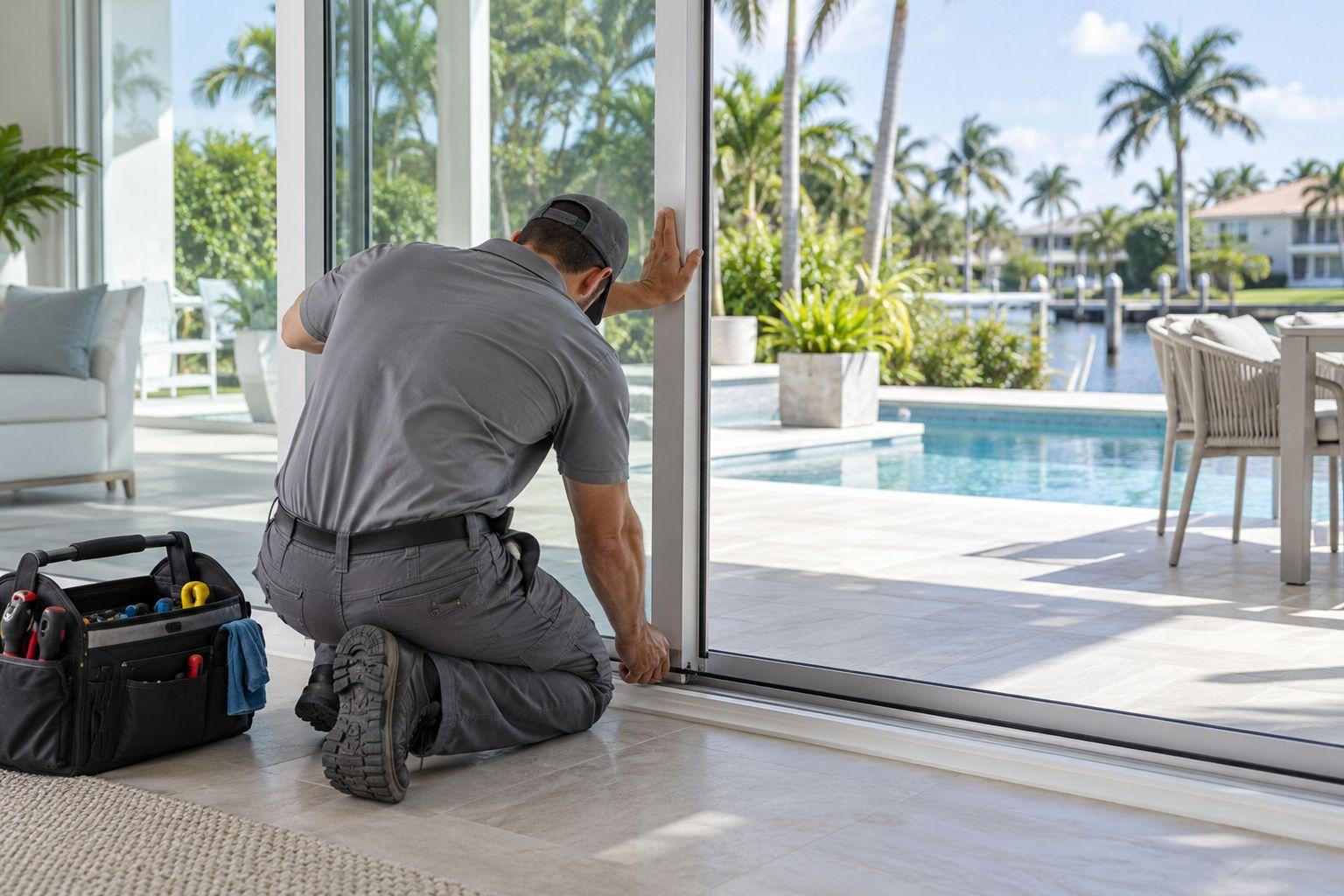
Port St. Lucie makes that happen faster. The Atlantic is only a few miles east, so salt-laden air reaches much of the city, and salt plus year-round humidity corrodes steel rollers and bearings and pits aluminum tracks and sills. Blown sand, grit and heavy pollen pack into the track and grind the wheels flat. Most homes here sit on slab-on-grade with concrete block and stucco, and sliding doors onto patios, screened lanais and pool decks are everywhere — often two or more sets per house — so one stiff door usually means the others are heading the same way.
While you wait — please don't
- Stop forcing it. Shoving a heavy glass panel strains the frame and the lock, and it can crack the glass.
- Do not lift the panel to help it along. Lifting it can pop the panel out of the track, and a sliding glass panel weighs about as much as a person.
- Stop using the door if the glass is cracked or the panel is out of its track. Glass under load can let go into the room, and this is not a repair to attempt yourself.
- Do not grease the track. Oil and grease hold the blown sand and grit that caused the wear in the first place, so the track packs up again quickly.
What the technician does
- The rollers come out and get inspectedThe technician checks each roller for flat spots and seized bearings. Anything flat-spotted or frozen is replaced.
- The track is cleaned and checkedPacked sand, grit and debris come out of the track. The technician then checks the track for wear and bends, because a heavy panel on worn rollers wears a groove that will chew through new rollers too.
- Roller height is adjustedThe adjustment screws are set so the panel runs level and clears the sill. This is what makes the door move with one finger instead of two hands.
- The frame is checked for sagIf the head or sill has moved, no roller will fix the drag on its own. The technician looks at the frame before deciding what parts are needed.
- The lock is realignedRaising or lowering the panel moves the latch relative to the keeper. The lock gets reset afterwards so the door still latches cleanly.
- You see the price firstThe estimate is free. The technician looks at the door, explains what it needs and gives you the price, and you approve it before any work starts.
Why this happens in Port St. Lucie, FL
Port St. Lucie grew out of huge 1960s-era platted subdivisions and kept building west, so a technician can work on a forty-year-old aluminum slider in River Park or Sandpiper Bay in the morning and a newer impact-rated unit in Tradition, Verano or St. Lucie West in the afternoon. Older single-pane aluminum sliders are still widely in service across Florida, and they are heavy. Put a heavy panel on corroded rollers and the track takes the damage, which is why corrosion-related service calls here are a year-round staple rather than a seasonal one.
Timing matters too. Problems run year-round in Florida but peak in the summer rainy and hurricane season, June through November, when daily afternoon storms and wind-driven rain show up every worn seal and clogged weep hole. A door that already drags is a door you cannot get closed and locked in a hurry, and the Treasure Coast is a high-risk hurricane corridor. There is a second bump in October and November as seasonal homes are reopened and inspected, which is often when a door that sat unused all summer turns out to be stuck. Sorting out stiff rollers before that stretch is easier than doing it during it.
Questions people ask
- Is it the rollers or the track?
- Usually both, in that order. Worn rollers drag and wear a groove in the aluminum track, and that groove then wears every new roller you fit. The technician checks the track condition at the same time as the rollers so the repair holds.
- Why do rollers fail so fast in Port St. Lucie?
- Salt-laden air off the Atlantic reaches much of the city and corrodes steel roller bearings. Add constant humidity, sprinkler overspray and blown sand packing the track, and the wheels seize or flatten sooner than they would inland.
- Do I need a permit for this?
- Like-for-like repairs such as rollers, track work, handles and locks normally require no permit in Florida. Replacing the whole door unit or altering the opening typically does, and usually needs a product with current Florida Product Approval. Your local building department can confirm what applies at your address.
- My door is impact-rated. Can it still be repaired?
- Impact-rated sliders are heavy and the hardware is specific to the unit, so do not take the panel out yourself or try to force it. Let the technician look at it and tell you what it needs before anything is removed.
- How do I know the rollers really needed replacing?
- Ask the technician to show you the old roller once it is out, so you can see the flat spot or feel the seized bearing. Ask for the reasoning in writing with the estimate as well.
One call
One call sets it up: we arrange sliding door service in Port St. Lucie with independent local technicians, and the estimate is free. The technician looks at your door and gives you the price before any work starts, and nothing happens until you approve it — call (888) 851-3682 or send a request through the form on this site.
Something else in this area
- Lock won't catch, handle loose
- Door is off its track
- Broken or foggy glass
- Rollers worn out
- Bent or worn track
- Drafts, whistling or water coming in
One Call Sliding Door Repair arranges the visit; the technician does the work and gives you the price.