
Sliding door hard to open or close in St. Petersburg, FL
If it takes both hands and a shove to move the door, the rollers under the panel are almost certainly worn out, flat-spotted or seized. Rollers are small wheels carried in a housing at the bottom of the panel. When they stop turning, the panel stops rolling and starts dragging along the track instead. That is the scraping sound and the extra effort you are feeling.
Phones answered around the clock · free estimate
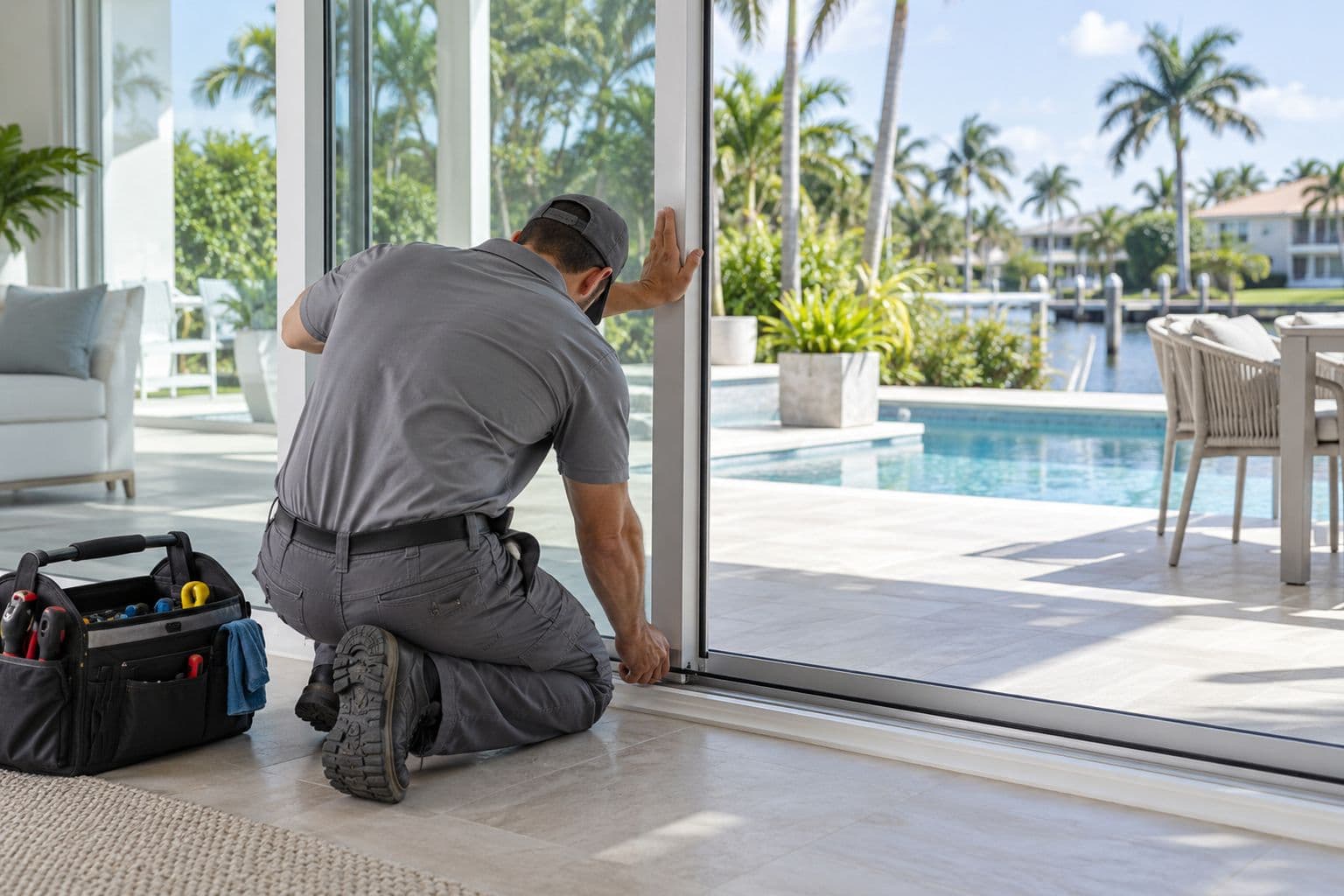
St. Petersburg sits on a peninsula between Tampa Bay and the Gulf, so humidity stays high all year and salt-laden air reaches nearly every property. Salt air and moisture seize steel roller bearings and pit aluminum tracks and sills. Blown sand, grit and heavy pollen pack the track and grind the rollers flat. Florida's housing stock skews post-1960, with sliders extremely common onto patios, screened lanais, pool decks and condo balconies, and older single-pane aluminum units are still widely in service here. A heavy panel on worn rollers eventually wears a groove into the track, and that groove then chews up every new roller you put in.
While you wait — please don't
- Stop forcing it. Shoving a heavy glass panel strains the frame and the lock, and it can crack the glass.
- Do not lift the panel to help it along. Lifting the panel to get it moving can pop it out of the track, and a sliding glass panel weighs about as much as a person.
- Stop using the door if the glass is cracked. If the panel is cracked or chipped, or already off its track, stop using the door and do not try to handle it yourself — it shatters into the room.
- Do not grease the track. Oil and heavy grease hold blown sand and grit against the track, which grinds the rollers down faster than before.
- Leave impact-rated doors alone. Coastal openings here may be impact-rated or part of a protected opening, so leave that work to the technician rather than taking the panel apart.
What the technician does
- The rollers come out for a lookThe technician inspects the rollers and replaces any that are flat-spotted, rusted or seized. Ask to see the old roller when it comes out.
- The track gets cleaned and checkedPacked sand, grit and old debris are cleared from the track. The track is then checked for wear, grooving and bends, since a worn track will ruin new rollers.
- Roller height is adjustedEach roller has an adjustment screw. The height is set so the panel runs level and clears the sill instead of dragging on it.
- The frame is checked for sagIf the head or jamb has shifted, the panel will bind no matter how good the rollers are, so the frame is looked at before anything is called finished.
- The lock is realignedRaising or lowering the panel moves the latch relative to the keeper. The lock alignment is reset after the adjustment so the door still latches properly.
- You see the price firstThe estimate is free. The technician looks at the door, explains what it needs and gives you the price, and you approve it before any work starts.
Why this happens in St. Petersburg, FL
Salt air is the defining maintenance issue in St. Petersburg. Homes within a few miles of Tampa Bay or the Gulf see corrosion on metal hardware far faster than inland Florida, and sliding door rollers are steel parts in small housings that sit low, near the sill, where moisture collects. Add blown beach sand near the water and heavy spring pollen, and the track fills with abrasive grit that works like sandpaper every time you move the panel. Neighborhoods close to the water — Snell Isle, Coquina Key, Shore Acres, Pinellas Point — are dealing with the same salt and moisture that older block homes in Disston Heights or Jungle Terrace see a little more slowly.
The housing here matters too. St. Petersburg has a very large share of 1950s–1970s concrete block and stucco ranch homes, historic districts like Old Northeast and Kenwood, and a growing number of downtown and beach-area condo towers. Many of those homes and condos have aluminum-framed sliders, sometimes two or more sets, onto patios, lanais and balconies. Problems run year-round but climb in the summer rainy and hurricane season, June through November, and there is a second bump from November to April when seasonal residents come back and open up homes that have been closed for months. A door that sat untouched all summer in this humidity often needs the rollers and track looked at before it slides easily again.
Questions people ask
- Can I just clean the track and fix it myself?
- Clearing loose sand and grit from the track is reasonable and sometimes helps a little. But if the panel still takes a shove, the rollers are worn and the panel has to come out to change them, which is heavy, awkward work. Forcing or lifting the panel risks dropping it out of the track.
- Do I need a permit for this in St. Petersburg?
- Like-for-like repairs such as roller, track, handle or lock replacement normally require no permit in Florida. Replacing the whole sliding door unit or altering the opening typically does, and the product generally needs a current state or local product approval. Permits are issued by your local city or county building department, so confirm with them.
- Why do my rollers keep failing even after replacement?
- Usually the track is the reason. A heavy panel riding on dead rollers wears a groove into the aluminum, and that groove then wears down every new roller set. That is why the track is checked for wear and bends as part of the work, not just the rollers.
- My door is on a condo balcony near the beach. Does that change anything?
- The salt exposure is harder on hardware there, so rollers and lock parts corrode faster. If the door is impact-rated or part of a protected opening, say so when you call, since Florida's code requires exterior openings in wind-borne debris areas to be impact-rated or protected. Your building department can confirm what applies at your address.
- Are you the company that comes out?
- No. One Call Sliding Door Repair is a referral and scheduling service that arranges sliding door service with independent local technicians across all fifty states. We are not the contractor and we do not perform the work. The technician who comes to your St. Petersburg door handles the repair and gives you the price.
One call
One call sets it up: phone (888) 851-3682 or send a request through the form on this site, and we will arrange for an independent local technician to look at your St. Petersburg sliding door. The estimate is free, and you approve the price before any work starts.