
Hard to slide in Orlando, FL
If it takes both hands and a shove to move the door, the rollers under the panel have almost certainly given up. Rollers are small wheels carrying a very heavy glass panel. When the bearings seize, or the wheels wear flat on one side, the panel stops rolling and starts dragging along the track. The door still moves, but you are pushing the whole weight of the glass instead of rolling it.
Phones answered around the clock · free estimate
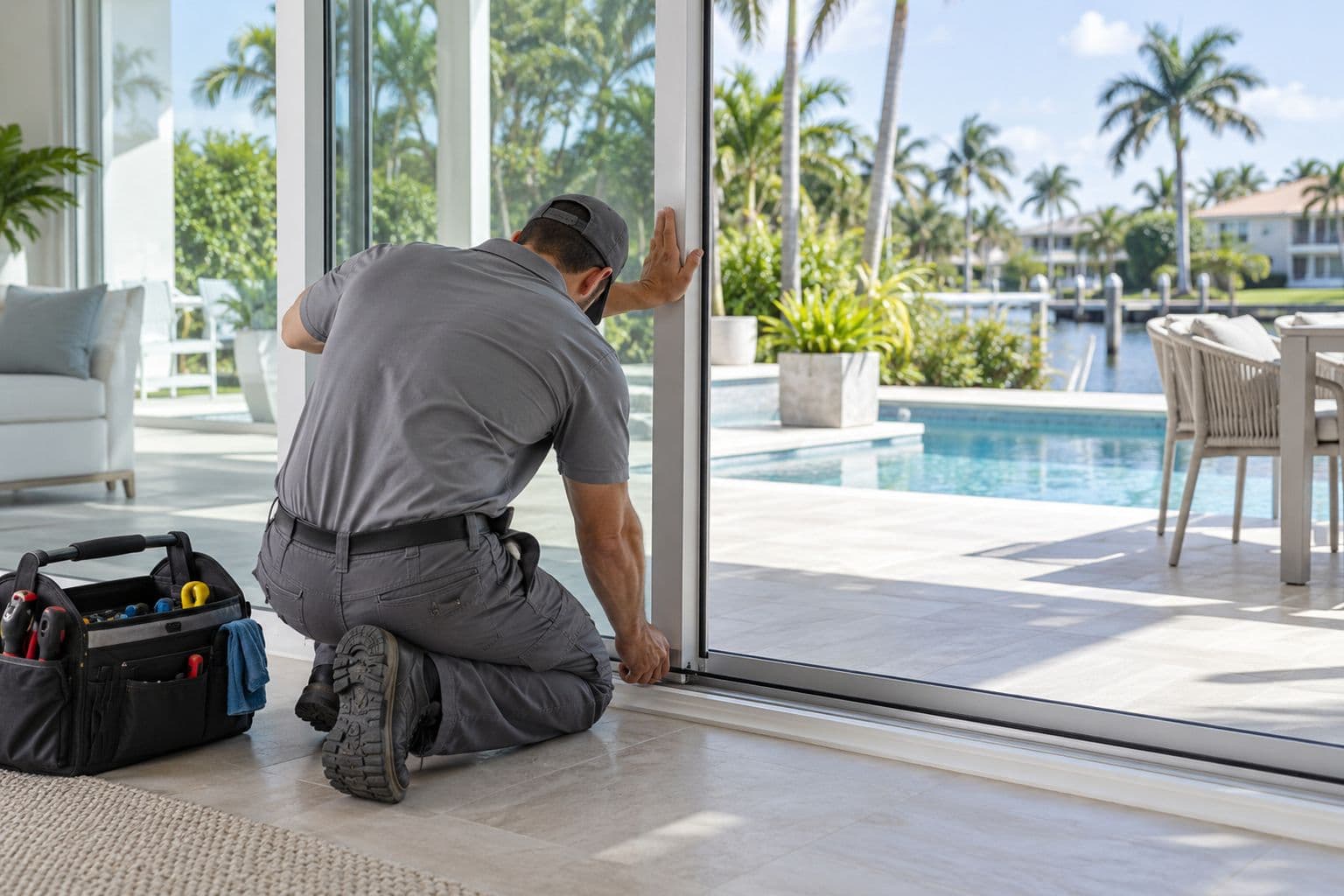
Orlando makes this happen faster. Central Florida humidity sits on steel roller bearings nearly year-round and rusts them from the inside, and there is no freeze season to speak of to slow it down. Grit, dirt and heavy spring pollen pack into the bottom track, and the panel grinds that debris into the metal every time you use the door. Most Orlando homes came up in the 1970s through 2000s suburban building waves, and sliders onto patios, screened lanais and pool decks are standard here — often more than one set per house. Aluminum-framed sliders are very common in Florida, and aluminum tracks pit and wear a groove once a heavy panel rides on flat rollers. After that, the groove starts wearing out every new roller you put in.
While you wait — please don't
- Stop forcing it. Shoving a heavy glass panel strains the frame and the lock and can crack the glass.
- Do not lift the panel to help it along. Lifting a sticking panel can bring it out of the track, and a sliding glass panel weighs about as much as a person.
- Stop using the door if the glass is cracked or the panel is out of its track. Glass under strain can shatter into the room, so leave it alone and have someone look at it.
- Do not grease the track. Oil and heavy grease hold Orlando's dust and pollen and turn the track into a paste that makes the dragging worse.
What the technician does
- The rollers come out for inspectionThe technician pulls the panel or accesses the roller assemblies and looks at the wheels. Flat-spotted, seized or rust-locked rollers get replaced.
- The track is cleaned and checkedPacked grit, pollen and debris come out of the bottom track. The track is then checked for wear, grooving and bends from years of a heavy panel riding low.
- Worn track gets addressedIf the aluminum is grooved or pitted, the technician explains the options, because a worn track will chew through new rollers too.
- Roller height is adjustedThe adjustment screws are set so the panel runs level and clears the sill. Done right, the door should move with one hand.
- The frame is checked for sagA sagging head or frame makes the panel bind no matter how good the rollers are, so it gets looked at before anything is called finished.
- The lock is realignedRaising or lowering the panel moves the latch relative to the keeper, so the lock is reset to engage cleanly afterward.
Why this happens in Orlando, FL
Orlando sits inland, so salt spray is not the problem here. Constant humidity is. Moisture works into steel rollers and lock cylinders and rusts them, and the daily afternoon thunderstorms from June through September keep everything damp. A door that was merely stiff in spring is often a two-handed job by August.
Hurricane and tropical-storm season runs June 1 through November 30, and wind-driven rain reaches well inland, so a patio door that will not close fully or will not lock is worth sorting before the weather turns. Orlando's newer subdivisions on the south and east sides, including the Lake Nona area, went up in large tracts of near-identical homes, which means a lot of identical sliders reaching the same age and wearing out around the same time. Older neighborhoods closer to downtown, like College Park, Lake Eola Heights and Colonialtown, often have older aluminum units with original hardware still in service.
Questions people ask
- Can I just clean the track and fix it myself?
- Cleaning the track is worth doing and sometimes helps a little. But if the rollers are flat or seized, cleaning will not bring the door back, and removing a heavy glass panel to reach them is not a job to take on alone.
- Why does this keep happening to my door in Orlando?
- Humidity rusts the roller bearings and pollen and grit pack the track, so rollers here work in bad conditions all year. If the panel has been dragging for a long time it has likely worn a groove in the aluminum track, which then wears new rollers too.
- Do I need a permit for this in Orlando?
- Like-for-like repairs such as rollers, track work, handles and locks normally need no permit in Florida. Replacing the whole door unit or altering the opening typically does, and products generally need a current Florida Product Approval. Your local Orlando-area building department can confirm what applies at your address.
- Will the door lock properly again afterward?
- It should. Adjusting roller height changes where the latch meets the keeper, so lock alignment is reset as part of the work. That matters here, since a door that does not latch tightly leaks during Orlando's summer storms.
- How do I know the rollers really needed replacing?
- Ask the technician to show you the old rollers once they are out — flat spots and seized bearings are easy to see. You can also ask for the reasoning in writing before you approve anything.
One call
One Call Sliding Door Repair arranges sliding door service with independent local technicians across all fifty states, including Orlando — we schedule the work, we are not the contractor. Call (888) 851-3682 or send a request through the form; the estimate is free, and the technician looks at the door and gives you the price for your approval before any work starts.
Same problem in nearby cities
Something else in this area
- Door is off its track
- Broken or foggy glass
- Screen door torn or off
- Drafts, whistling or water coming in
- Bent or worn track
- Lock won't catch, handle loose
One Call Sliding Door Repair arranges the visit; the technician does the work and gives you the price.