
Drafts and leaks in St. Petersburg, FL
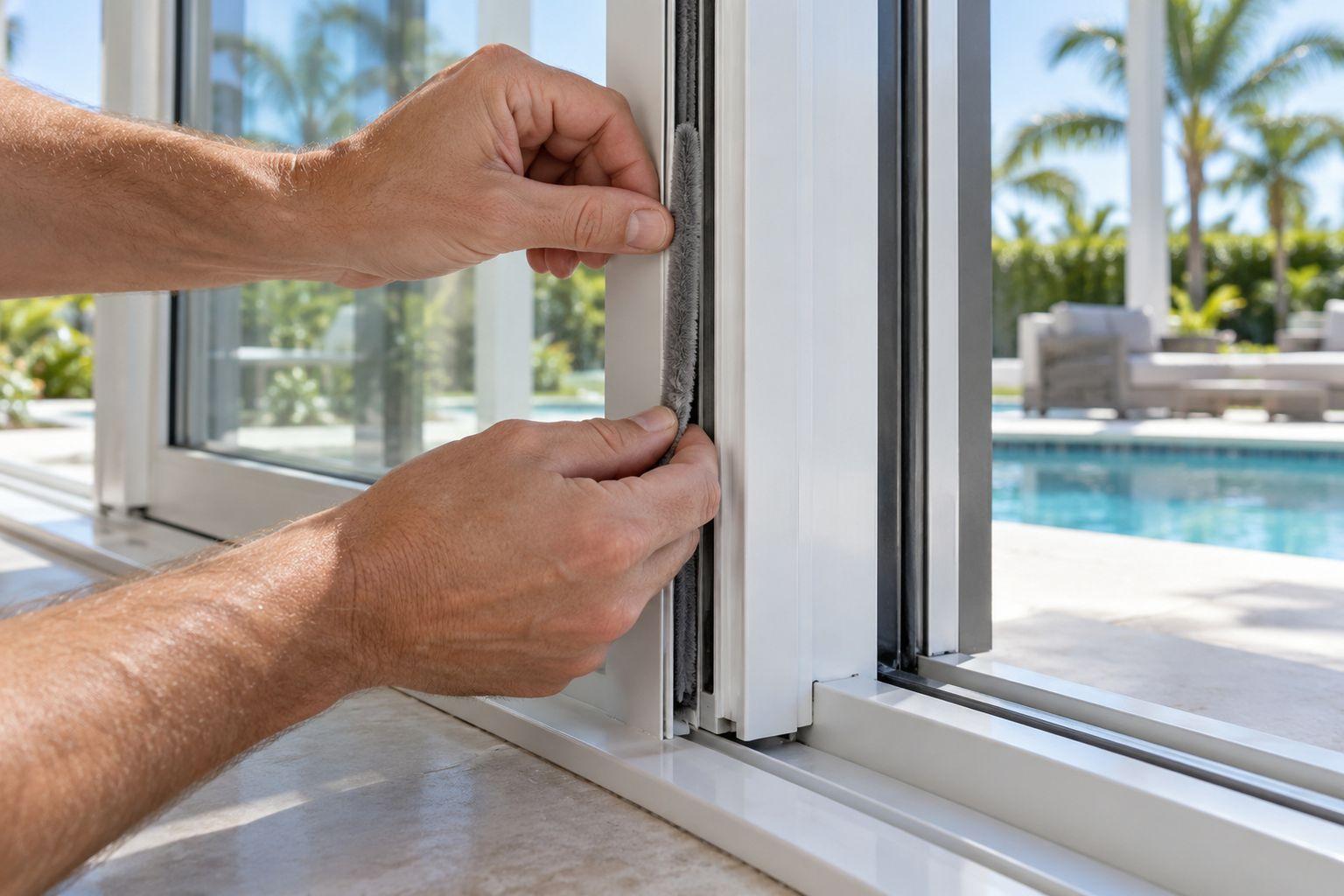
You can feel air along the edge of the panel, and after a hard rain there is water on the floor inside the track. In almost every case the fuzzy pile weatherstrip on the stiles and the interlock has flattened, shrunk or torn, so the panel no longer presses tight against the frame. The second half of the problem is usually drainage: the sill has small weep holes that let rainwater back out to the patio, and when they pack with sand, grit and dirt the water pools in the track until it comes over the inside lip.
Phones answered around the clock · free estimate
Both things happen fast in St. Petersburg. The city sits on a peninsula between Tampa Bay and the Gulf, so humidity stays high all year and salt-laden air reaches nearly every property, pitting aluminum tracks and sills and corroding steel rollers and bearings. Blown beach sand and heavy pollen pack the track. Intense sun and heat shrink and crumble old weatherstrip and vinyl parts. Then the summer rainy season and the June-through-November hurricane season push wind-driven rain straight at the sill, which is exactly where a worn seal and a blocked weep hole show up.
While you wait — please don't
- Do not caulk the weep holes shut. Those small slots in the sill are the door's only drain, and sealing them traps water in the track so it spills inward instead.
- Keep water away from outlets and cords. If rain is reaching a floor outlet, a power strip or an extension cord near the door, unplug what you can reach safely and leave that circuit alone until it is dry.
- Do not lift the panel out to get at the seal. A sliding glass panel weighs about as much as a person and shatters into the room if it slips, so leave removal to the technician.
- Do not leave it leaking through storm season. Water that gets under a sill rots the subfloor and the framing out of sight, and a door that leaks in an ordinary storm will leak badly in a hurricane.
- Do not modify an impact-rated door. If your slider is impact-rated or has an approval label, stop and let a technician handle it rather than drilling, shimming or adding parts to the frame yourself.
What the technician does
- The technician looks at the whole opening firstBefore anything is quoted, they check where the air and water are actually getting in — the stiles, the interlock between the panels, the sill or the frame perimeter. The estimate comes after that look, and you approve it before work starts.
- Pile weatherstrip is replacedNew pile weatherstrip goes on the stiles and at the interlock so the panel meets the jamb and the fixed panel tightly again. This is what kills the draft you feel along the edge.
- The interlock is checked for alignmentThe two panels have to meet square for the seal to do anything. If the interlock is out of line, the panel gets adjusted so the faces close evenly top to bottom.
- The sill and weep holes are clearedSand, grit and old debris come out of the track, and the weep holes are opened and checked so rainwater drains back outside the way it was designed to.
- Caulking and flashing are inspectedThe technician looks at the caulk and flashing where the frame meets the wall, since water arriving from outside the frame is a different fix than a worn seal.
- The seal is testedThe door is tested against rain and wind so you can see the water going where it should. Ask them to show you the old weatherstrip and the cleared weep holes, and to put the reasoning in writing.
Why this happens in St. Petersburg, FL
Florida's housing stock skews post-1960, and sliding glass doors are extremely common here onto patios, screened lanais, pool decks and condo balconies — often two or more sets in one home. St. Petersburg has a very large share of 1950s–1970s concrete block and stucco ranch homes, plus bungalows and Mediterranean Revival houses in the historic districts and a growing number of downtown and beach-area condo towers. Aluminum-framed sliders are very common in older homes and in coastal and condo construction, and older single-pane aluminum units are still widely in service. Aluminum sills pit in salt air, and once the surface is rough the pile weatherstrip wears against it faster.
Timing matters here too. Leak complaints across Florida spike in the summer rainy and hurricane season, with a second rise in spring pollen and blown-sand season along the coast. In St. Petersburg, demand climbs ahead of and right after hurricane season, and again from November to April when snowbird season brings seasonal residents back to homes that have sat closed for months. Low-lying waterfront areas like Shore Acres have seen repeated flooding, and balcony doors in condo buildings near the Gulf take wind-driven rain head on. If you are in Snell Isle, Old Southeast, Coquina Key or the EDGE District, the fix is the same one — seal the panel, drain the sill.
Questions people ask
- Do I need a permit to have the weatherstripping and sill drainage fixed?
- Like-for-like repairs such as roller, track, handle, lock or weatherstrip replacement normally require no permit in Florida. Replacing the whole sliding door unit or altering the opening typically does, and the product generally needs a current state or local approval. Your St. Petersburg building department can confirm what applies at your address.
- Will new weatherstripping stop a leak during a hurricane?
- New pile and a clear sill stop the everyday drafts and wind-driven rain that get past a worn seal. But Florida enforces wind-load requirements, and in designated wind-borne debris regions exterior openings such as sliding glass doors must be impact-rated or protected by approved shutters or panels. Ask the technician what they see, and check with your local building department about what your opening needs.
- Why does water come in on my door but not my neighbour's?
- Usually it is exposure plus drainage. A door that faces the direction a summer storm drives rain, with weep holes packed by blown sand and grit, will pool water in the sill while a sheltered door stays dry. Salt air also wears nearby hardware and seals at different rates from one property to the next.
- My place was closed up all summer and now the door drafts. Is that normal?
- It is a common call during snowbird season. Months of sun, heat and high humidity shrink and stiffen old weatherstrip and vinyl parts while nobody is there to notice, and debris settles into the track. The seal and the sill both get checked at the same visit.
- Who actually comes out?
- One Call Sliding Door Repair is a referral and scheduling service that arranges sliding door service with independent local technicians. We are not the contractor and we do not perform the work. The technician looks at the door and gives you the price before anything starts.
One call
One call sets up a visit from an independent local technician, and the estimate is free. They look at the door, explain what is leaking and why, and you approve the price before any work begins — call (888) 851-3682 or send a request through the form on this site.
Something else in this area
- Bent or worn track
- Hard to open or close
- Door is off its track
- Lock won't catch, handle loose
- Broken or foggy glass
- Rollers worn out
- Screen door torn or off
One Call Sliding Door Repair arranges the visit; the technician does the work and gives you the price.